

The win came before the product was finished
She didn't pitch an idea. She showed a working app, and the co-founder asked to join.
“When you walk up to someone and say I'm building roleplay communication training technology, people's eyes glaze over. But when you show them the app, they go, that's so cool, I wish I'd had this.”
By the time Regina found her technical co-founder, DryRun was about two-thirds built, with two of its three core features running well. That working demo did what no pitch could.
Because she'd done the foundational work herself, she came into that partnership from a position of strength instead of handing over the keys to get taken seriously. She'd spent years certain software wasn't for someone like her, so this counts as a real win. Not revenue yet. A foothold, momentum, and a partner.
A capable founder who'd ruled out software entirely
The wall for non-technical founders isn't a shortage of ideas. It's a believable way in.
Regina had ideas. About sixty over the years, and none of them software. That was on purpose.
She knew the math. A non-technical founder with no MVP doesn't get to raise money on a software promise, so she stuck to ideas she could start on a budget, like physical products she could make in small batches.
“I never even let my head venture into those ideas.”
Building DryRun the traditional way looked like roughly $100,000 and a year and a half. Her fallback was to teach herself off YouTube around a full-time job, which she figured would take about as long.
Practice hard conversations with AI instead of a person
Roleplay works. The human version is clunky. So she handed it to AI.
Regina spent years in communication workshops and client management, and she believed in roleplay for getting better at hard conversations. She also found it cumbersome in its usual form, with a live human partner. You need another person. They can't give clean, real-time feedback. You can't rerun the same moment three different ways.
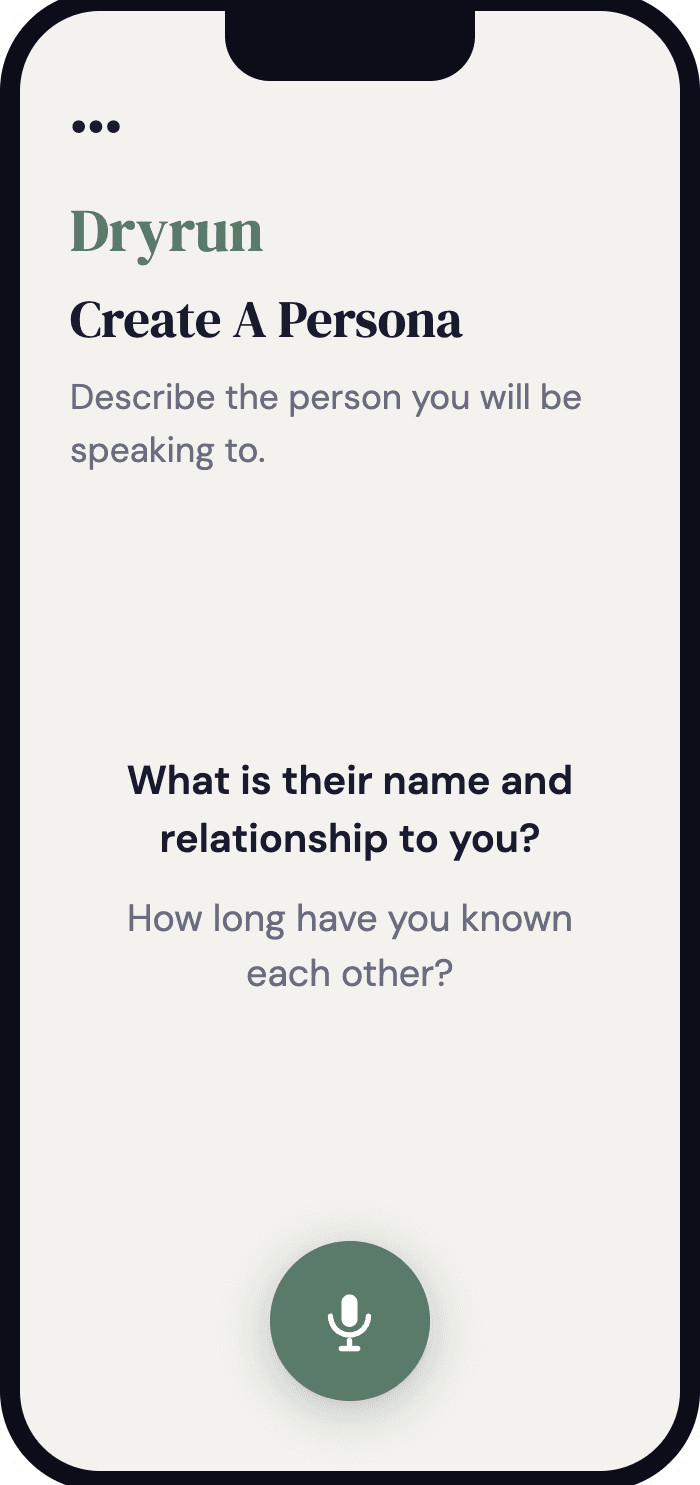
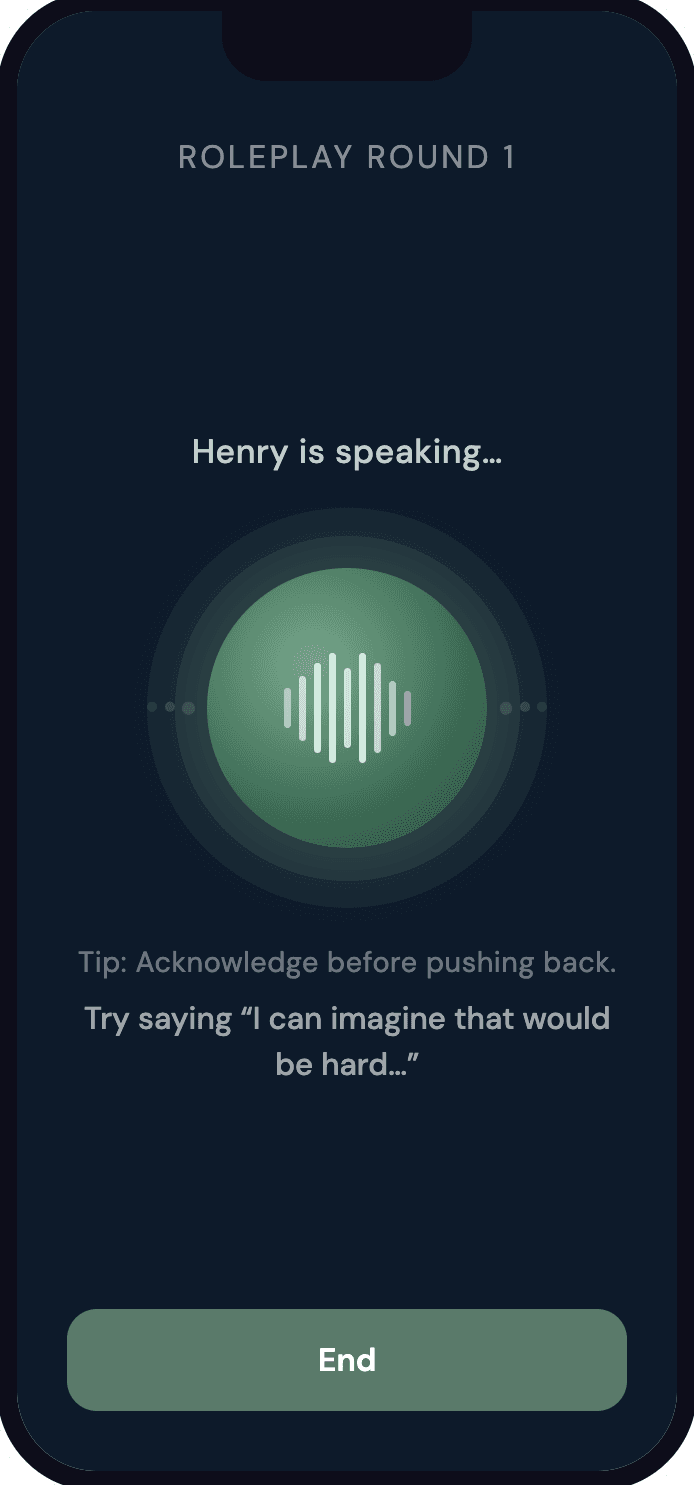
DryRun's answer is simple to say and hard to build. Practice those conversations with an AI, and get coached as you go. Three steps at the core. Build the persona, set the scene, run the roleplay.
Discovery interviews killed her original pricing
She found her real customer in a conversation, not six months into a build.
Regina started by assuming life coaches and therapists were her buyers. They'd purchase DryRun and offer it to clients. Clean on paper.
Then she interviewed actual coaches and therapists, and the plan fell apart in a useful way. They wouldn't pay monthly on behalf of clients, and usage was too sporadic for a subscription.
“It was only through talking with them about pricing that I had the realization they're not going to pay. And it doesn't even make sense to charge monthly.”
So she flipped it. End users get the value, so end users pay, on a credit model that matches real usage. Coaches and therapists became a referral channel, not the buyer. It sounds like a small change. It isn't. It rewires who you build for, how you price, and how you describe the problem you solve. She made the call inside Founder Guide, and the system updated her plan and notes to match instead of leaving three half-stale docs to reconcile by hand.
Three tricks that cut the fear
You can build software you can't read. Three habits made that survivable.
Here's what non-technical founders quietly dread. You build something out of code you can't read, and it's terrifying. For Regina that fear didn't show up once and leave. It sat with her the whole time. Three things pulled her through.
“It was like being able to shine light on a part of the code I was working on blindly.”
The straight line is a myth. She'd feel in control, then hit a wall and start questioning whether she was doing it right. The difference was having someone to ask. Mentorship turned what she figured would be a year of YouTube into a few months of real progress.
Cutting scope to keep moving
When the buyer changed, half the product had to go. She cut it.
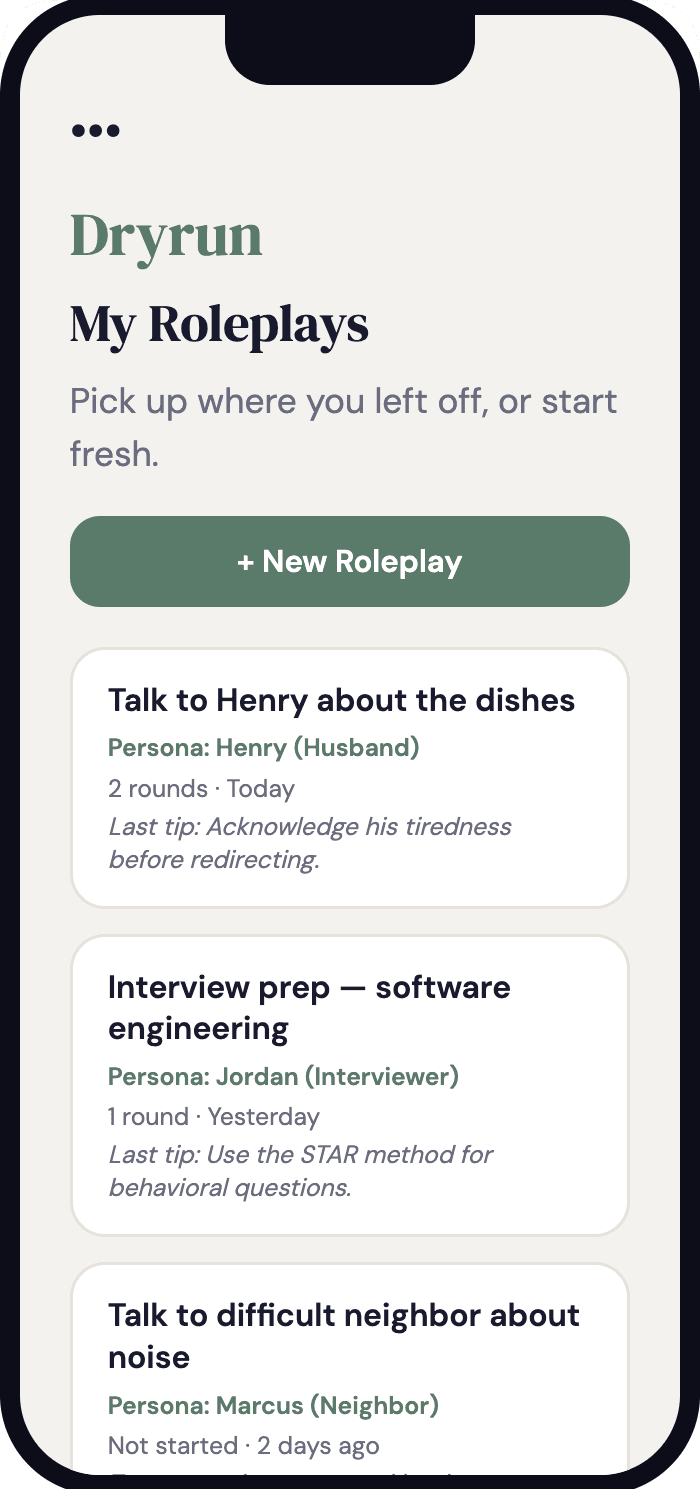
The first design had two full sides. A consumer flow and a therapist dashboard where therapists added clients. When the buyer changed, that whole apparatus stopped making sense, so she removed it.
She also switched setup from typing to voice, since the roleplay needs too much context to type comfortably. What survived was the three-step core she'd carried in her head the entire time.
Where DryRun is now
Not finished. Not pretending to be. Further than she thought possible.
The app isn't done. Her co-founder is finishing the roleplay engine and the last main feature. The honest open question, the one that's been there since day one, is whether the AI can feel real enough to make it sticky. Lately it's looking promising.
The plan from here is to launch the consumer version, hold momentum with her co-founder, and validate the B2B version she believes holds the real revenue. There's validation still ahead of her. But she's holding a working product, a real partner, and a business that finally feels like it could be something.
What Regina would tell a founder like you
Stop confusing doubt with caution.
“The doubt is literally just procrastination.”
Do discovery interviews before you write code, and ask honestly.
Done right, they save you. Regina's early conversations with her assumed customers showed they would never pay, which let her rebuild the pricing before she built on top of it, not six months in. Done wrong, they mislead you. The comfortable questions that get friends to call your idea great only hand you false confidence. Ask about what people already do and pay for, not whether they like the concept.
Don't let competition stop you.
Other people already working on a problem doesn't mean you can't solve it too, differently or better. A me-too business you actually build beats a brilliant idea you talk yourself out of.
Do some of the building yourself, even if you hand it off later.
The work she did first is exactly why her partnership started strong. Doing it yourself gives you perspective, confidence, and a stronger position when a partner shows up.